IN THE STATES: Health Reform Depends on All of Us

Earlier this week Dr. Robert Margolis, the CEO of Torrance-based HealthCare Partners Medical Group, and I co-authored an op-ed in the Los Angeles Daily News. Our essay highlights some of the work we did on our nonpartisan, multi-stakeholder California Task Force on Affordable Care, which makes recommendations that could save Californians $300 billion during the next decade while improving the quality of care.

We also point out ways in which health care isn't just about passing laws and spending money. It's also about us. As we noted, "developing a medical system that keeps us healthy without making us poor isn't truly within the control of politicians in Sacramento or Washington, D.C. Getting a better bang for our buck depends mostly on us." (And no, we did not know at the time that the brand new Healthcare.gov site that went up today would have "Take health care into your own hands" as a slogan.)

That means doctors and patients have to work together to learn about quality at local hospitals. In California, they can use both Medicare Hospital Compare and CalHospitalCompare.org to search for the highest quality of care; consumer engagement helps create pressure for better value for medical spending.

Politicians need to do their job on problems like obesity. Sacramento is considering taxing sweetened beverages. Los Angeles has already banned construction of new fast food restaurants in certain areas of town. (This post also describes how one county has even cracked down on "Happy Meals" -- no toys unless the meal is happy and healthy.) But Californians have to make better decisions for themselves, too.

We wrote about a program at Southern California-based HealthCare Partners where "clinicians, nurses, and social workers interact with high-risk patients following their discharge from hospitals to reduce unnecessary and expensive follow-up hospital stays and emergency department visits. This effort has succeeded in reducing readmission of these high-risk patients by 18 percent, savings millions of dollars." (Joanne Kenen wrote a detailed post last week about this approach.)

As we wrote, "health care reform isn't over. In fact, it's just getting started."

Renovations at Cell and Genome Sciences Building Nearing Completion


The University of Connecticut is just months away from opening a new research building in Farmington to enhance Connecticut’s role as a leader in innovative high tech research and technology transfer in the areas of stem cell biology, advanced microscopy and imaging, computational biology and genetics.


Especially designed with open labs that flow into each other and office areas located on hallways running between labs, the new Cell and Genomic Sciences Building intends to promote interdisciplinary research among the academic and industry chemists, geneticists, physicists, mathematicians, cell biologists, and computer scientists housed there. This collaborative effort aims to capitalize on the power of different areas of scientific expertise to revolutionize the practice of medicine.

"Our goal is to maximize the state’s investment in stem cell research by establishing an infrastructure to support scientists in their quest of turning discoveries at the bench into therapies for diseases such as autism and cancer and to advance the field of regenerative medicine," says Dr. Marc Lalande, senior associate dean for research planning and coordination at the UConn Health Center and director of UConn’s Stem Cell Institute, as well as professor and chairman of the medical school’s genetics and developmental biology department. "This is an unprecedented opportunity for us."

Purchased by UConn with Board of Trustees’ approval in 2007, a former research and testing facility at 400 Farmington Avenue – across the street from UConn’s Health Center campus – has been undergoing a $52 million transformation and is to be equipped with the latest technologies for studying cells and their genomes. The new 117,000 square foot building is expected to open in July 2010.

The renovated building will house research laboratories, offices, a 100-seat auditorium, cafeteria, and incubator space for businesses eager to commercialize stem cell science. Designed by the Boston laboratory architecture firm Goody Clancy, the renovations will meet the requirements of a LEED Silver rating, according to project manager Kevin Norton.

The LEED (Leadership in Energy and Environmental Design) green building rating system – developed and administered by the U.S. Green Building Council – is the industry standard for measuring building sustainability.

Currently more than 100 construction workers are busy completing the mechanical and electrical systems, installing finishes, laboratory casework, interior window assemblies, and skylights over the corridors of the one-story structure.

Opportunities for Collaboration

"The overriding intent is to provide sufficient internal transparency to allow the entire research community in the building to interact, while providing natural light to internal spaces," says Norton.

Scientists in the building will be involved in a wide spectrum of research projects, including the design and construction of new laser-based microscopes, computer simulation of living processes inside cells, and sequencing of human and animal genomes, says Lalande. Being located close to UConn’s Health Center will support the goal of translating basic research findings to clinical trials, he adds.

Two corridors lead off the entrance lobby of the building to private areas dispersed around the facility for focused research.

Three major research programs will be re-located from the Health Center to the new facility: the UConn Stem Cell Institute (UCSCI), the R.D. Berlin Center for Cell Analysis and Modeling (CCAM), and the Department of Genetics and Developmental Biology. Together these three programs include about 180 scientists and their staff.

  • The UCSCI was established after the state, in 2005, enacted legislation to fund stem cell research through the Connecticut State Stem Cell Advisory Committee. Over the first three rounds of competition for the state funds, UConn researchers won $20.8 million – the majority of awards granted. The funding supports more than 32 laboratories at both the Farmington and Storrs campuses. UConn scientists have submitted 44 applications for the state’s fourth grant competition round, which begins next month.

UConn has spent more than $1 million to equip the human embryonic stem cell core facility that trains researchers and lab workers from around the state on lab techniques for stem cell research; 114 have been trained to date.

Recently, staff of the core facility developed induced pluripotent human stem cells, or iPS cells, which behave like embryonic stem cells and increasingly are being used by researchers to generate in vitro models of human disease.

The on-site presence of the UCSCI and the stem cell core facility will provide both hands-on expertise and resources to the wide range of investigators in the new building.

  • CCAM’s multidisciplinary team uses cutting-edge imaging, microscopy, and computational modeling to more accurately analyze living cells. CCAM has also developed a computer software and database system – the Virtual Cell – that allows researchers to construct computational models of cells, perform simulations, and analyze the results of those simulations to better understand cell physiology. More than 2,000 scientists from around the world have used the Virtual Cell to carry out simulations.

To handle these simulations (some are quite large), the new Center will house CCAM’s High Performance Computing Facility, which also provides computer support to the CCAM microscopy facility and other research projects of individual UConn faculty members.

  • Equipped with $1.1 million of state-of-the-art technology to read entire genomes, the translational genomics core facility will have all the equipment necessary for DNA analysis and sequencing, gene expression analysis, genotyping, and the associated bioinformatics infrastructure to facilitate data analysis.

The new building will afford the 17 scientists from the Department of Genetics and Developmental Biology moving there the opportunity to work with their colleagues in ways that haven’t been possible before, and to use these new tools to isolate and study rare cells.

Having these programs in the same building along with researchers applying a broad range of cutting-edge approaches will significantly speed up cell research at UConn, Lalande says.

The potential of the new facility and continued stem cell funding by the state has already helped recruit two new faculty with expertise in stem cell biology and nanomedicine who are expected to join the new building’s research community later this summer, he adds.

"We’re thinking about the intersection of cell biology, genetics, and computer science, and other disciplines that inform those areas," he says.

Researchers will also find it easier to communicate with each other about their work, Lalande says, fostering collaborations that could lead to new insights into cell biology: "This building is designed to drive cross-pollination of scientific ideas to a new level."

From Lab to Marketplace

The new building will also expand the work of UConn’s Office of Technology Commercialization, including the Technology Incubation Program – UConn’s business incubator – by providing offices, conference rooms, and laboratories for six start-up biotechnology companies.


"While our scientists may generate the next stem cell breakthrough, to bring them to market there must be a group of people with the skills not only to start a company, but to help it grow," says Rita Zangari, interim director of the Office of Technology Commercialization and executive director of the Technology Incubation Program.

The new building has already helped to attract two bioscience companies, Zangari says. One company seeks to use stem cells in bone cement products, while the other – relocating to Connecticut from Massachusetts – is conducting research using stem cells extracted from tooth pulp for therapeutic use in combating degenerative diseases.

"Having the resources in place for our researchers and their industry partners to move discoveries from the lab to the marketplace fosters a climate in which ideas are easily exchanged and partnerships are developed," Zangari says. "Collaboration is the essence of UConn’s power to generate new discoveries and then build companies and jobs around them."

Veteran Oral Surgeon Joins UConn’s Dental Implant Center

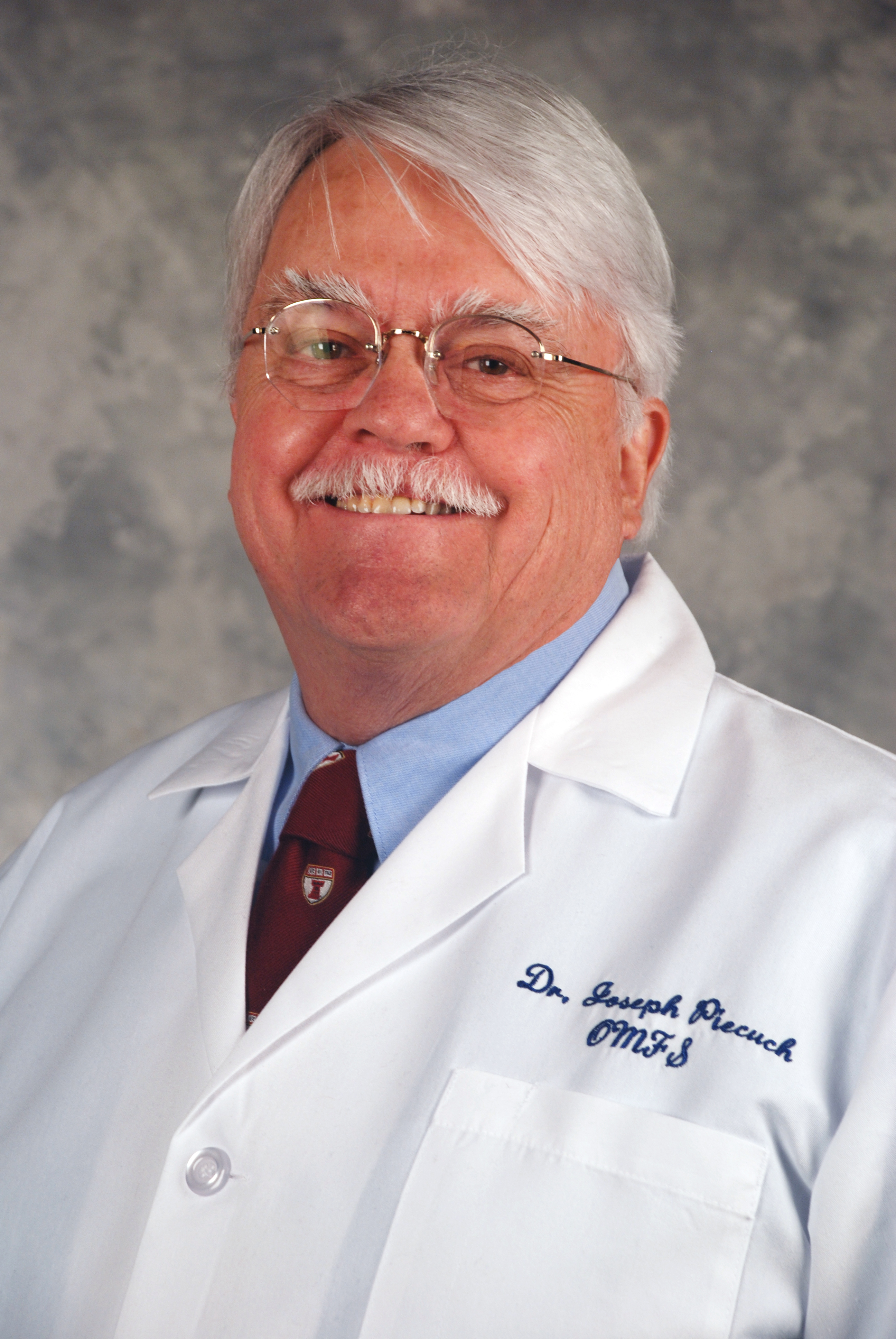
FARMINGTON, CONN. – Dr. Joseph Piecuch is now seeing patients in the Center for Implant and Reconstructive Dentistry at the University of Connecticut Health Center.

Piecuch, formerly a tenured associate professor of oral and maxillofacial surgery at the UConn School of Dental Medicine, is back at the Health Center as a clinical professor after 25 years in private practice in Avon. He holds a doctorate of dental medicine from Harvard and medical degree from the University of Washington, specialty trained at the University of Washington and the Gemeente Ziekenhuis in the Netherlands, and is a veteran of active service in the United States Air Force. He has served as president of the Hartford Dental Society and the Connecticut Society of Oral and Maxillofacial Surgeons.

Piecuch has published more than 100 scientific articles, abstracts, and textbook chapters, has been the editor of two review textbooks, and currently is editor of “The Communicator,” the publication of the Connecticut State Dental Association. He also is associate editor-in-chief of the International Journal of Oral and Maxillofacial Surgery. His research interests have included bone grafting, manufactured bone substitutes, and reconstructive surgery of the jaws.

Piecuch is a resident of Simsbury.

More information about the Center for Implant and Reconstructive Dentistry, part of the New England Musculoskeletal Institute, is available at http://dentalimplants.uchc.edu. To make an appointment, call 860-679-7600 or e-mail dentalimplants@uchc.edu.

Photo: http://today.uchc.edu/images/news/piecuch.jpg
Caption: Dr. Joseph Piecuch is seeing patients in the Center for Implant and Reconstructive Dentistry at the UConn Health Center.

The University of Connecticut Health Center includes the schools of medicine and dental medicine, the UConn Medical Group, University Dentists, and John Dempsey Hospital. Founded in 1961, the Health Center pursues a mission of providing outstanding health care education in an environment of exemplary patient care, research and public service. More information about the UConn Health Center is available at a href="http://www.uchc.edu/">www.uchc.edu.

Note: News professionals are invited to visit the Office of Communications home page at today.uchc.edu for archived news releases and other information.

Color and Coney Island Share the Spotlight at LeWitt Gallery


What: Being in the Moment – paintings by Catherine M. Elliott and Coney Island Love Affair – photographs by Lou Russo

Where: Celeste LeWitt Gallery, UConn Health Center, 263 Farmington Avenue, Farmington

When: April 29 through August 4, 2010, daily 8 a.m. to 9 p.m.

About the Artists:

Catherine M. Elliott of Simsbury is a contemporary artist whose work is evocative of the American Impressionism style of painting. She states her paintings are primarily of atmospheric and light conditions that depict the grace and elegance of the New England countryside. This exhibit explores and represents her love of color.

"My goal is to capture a moment of time and place with color and form to invoke the viewer to 'see' the sublime," says Elliott. "Even before I begin a work, I'll have a good idea of what I want to achieve on the canvas. Of course a few diversions are welcome along the way. That's what keeps the creative process fresh and alive,'' says the artist.

Elliott’s work won the Grand Prize at the West Hartford Art League’s CT+5 show in 2009. Elliott has created numerous commissioned pieces, both commercial and private. She is an elected member of the Lyme Art Association in Old Lyme. She is currently represented by 12 galleries throughout New England and Ireland. She also teaches painting workshops and is a book illustrator.

Lou Russo of West Hartford, studied communications and film in college and after working in television as a videographer and producer, went on to attend the Hallmark Institute of Photography in Massachusetts. There he found himself more and more interested in the process of storytelling through photography.

"What I’m drawn to most is photographing life as it happens, moments in time that catch my eye and make me want to share my experience with others," says Russo, a Brooklyn, New York native. "It’s how I felt each time I found myself on Coney Island. I wanted others to see this place that I’ve always been so intrigued with."

Russo’s work was recently awarded the Rhode Island School of Design Award at the West Hartford Art League’s CT+5 show. His fine art photography has been exhibited in galleries and art spaces in Manhattan, Chicago, Miami, San Antonio and many other cities. A self-published book of his Coney Island images is in the works.

The University of Connecticut Health Center’s collection of fine arts serves to enhance the environment and promote the sense of a caring community for patients, visitors, staff and students. Art is selected, acquired and exhibited by the UCHC Art Advisory Committee. To view a selection of the Health Center’s permanent collection visit: http://auxiliary.uchc.edu/art.

The University of Connecticut Health Center includes the schools of medicine and dental medicine, the UConn Medical Group, University Dentists, and John Dempsey Hospital. Founded in 1961, the Health Center pursues a mission of providing outstanding health care education in an environment of exemplary patient care, research and public service. More information about the UConn Health Center is available at www.uchc.edu.

Note: News professionals are invited to visit the Office of Communications home page at today.uchc.edu for archived news releases and other information.

UConn Health Center Earns Quality Marks


Joint Commission Accreditation for John Dempsey Hospital, Behavioral Health

FARMINGTON, CONN. – The University of Connecticut Health Center has earned a Gold Seal of Approval™ for John Dempsey Hospital, including its inpatient behavioral health services, after recent site visits by The Joint Commission, a national hospital accrediting body.

"Accreditation for our organization demonstrates our commitment to patients’ safety and high-quality care," says Dr. Cato T. Laurencin, vice president for health affairs, dean of the UConn School of Medicine, and CEO of the UConn Health Center. "We have an outstanding Health Center with outstanding people. Joint Commission accreditation helps affirm this excellence."

"Above all, the national standards are intended to stimulate continuous, systematic and organization-wide improvement in an organization’s performance and the outcomes of care," says Mark Pelletier, The Joint Commission’s executive director of hospital programs, accreditation and certification services. "The community should be proud that the UConn Health Center is focusing on the most challenging goal – to continuously raise quality and safety to higher levels."

The Joint Commission conducted an unannounced, on-site evaluation of John Dempsey Hospital in December. The accreditation award recognizes the Health Center’s dedication to complying with The Joint Commission’s state-of-the-art standards on a continuous basis.

"We have excellent clinicians, staff and administrators throughout the Health Center who have remained completely focused and proactive about safety issues," says Dr. Mike Summerer, hospital director. "This latest quality acknowledgement is a result of their work and dedication. It’s a credit to our Department of Quality Programs. This has been, and will continue to be, a team effort."

The Joint Commission’s Quality Report for the Health Center is available at http://www.qualitycheck.org/qualityreport.aspx?hcoid=5667.

Founded in 1951, The Joint Commission seeks to continuously improve the safety and quality of care provided to the public through the provision of health care accreditation and related services that support performance improvement in health care organizations. The Joint Commission evaluates and accredits more than 17,000 health care organizations and programs in the United States, including hospitals, home care organizations, and other health care organizations that provide long term care, assisted living, behavioral health care, laboratory and ambulatory care services. The Joint Commission also accredits health plans, integrated delivery networks, and other managed care entities. In addition, The Joint Commission provides certification of disease-specific care programs, primary stroke centers, and health care staffing services. An independent, not-for-profit organization, The Joint Commission is the nation's oldest and largest standards-setting and accrediting body in health care. More information is available at www.jointcommission.org.

The University of Connecticut Health Center includes the schools of medicine and dental medicine, the UConn Medical Group, University Dentists, and John Dempsey Hospital. Founded in 1961, the Health Center pursues a mission of providing outstanding health care education in an environment of exemplary patient care, research and public service. More information about the UConn Health Center is available at a href="http://www.uchc.edu/">www.uchc.edu.

Note: News professionals are invited to visit the Office of Communications home page at today.uchc.edu for archived news releases and other information.

April, May Ayurveda Events at the UConn Health Center


FARMINGTON, CONN. – The University of Connecticut Health Center offers several Ayurveda events to the public in April and May. Ayurveda is the ancient Indian art of healing that blends science, philosophy and spirituality.

  • Cultivating Healthy Living II, Mondays, April 12, 19 and 26, 6 to 7 p.m., UConn Health Center, Conference Room EG-013.
    Learn techniques to coordinate mind, body and spirit, and develop self awareness and resilience, including relaxation, subtle energy and cosmic connections, and maintaining positive relationships. Registration fee is $90.
  • From Spirituality to Superconsciousness, April 16 to 18, Saylorsburg, Pennsylvania.
    This is a weekend retreat with Amala Guha, director of the UConn School of Medicine’s Complementary Alternative Supportive Care Program, at the Arsha Vidya Gurukulam Institute of Vedanta and Sanskrit in Saylorsburg, Pennsylvania. Learn ways to transform thoughts and habits for change. The focus will be on scientific coordination of mind, matter and spirit to achieve total awareness of self and our relationship with the universe. Registration fee is $170.
  • Introduction to “Mandalas”: Sacred Symbols of Imagery/Healing, Friday, April 23, 6 to 7 p.m., UConn Health Center, Conference Room EG-013.
    Learn about mandalas found in the natural world around us, how they have been used throughout history and across cultures, and how in today’s pluralistic setting of multi-faiths and non-faith they remain universal. Origin and history of mandalas also will be discussed. Please bring a set of coloring pencils. Registration fee is $35.
  • A Journey Through Colors of Mandala, Friday, May 14, 5:30 to 7:30 p.m., UConn Health Center, Conference Room EG-013.
    Learn about the revelation of colors in mandalas and their relationship to Ayurvedic neurophysiology (Chakras): a meeting of physics, philosophy, psychology and art. Design your own mandala and learn to reveal the mystical self. Please bring a set of coloring pencils. Registration fee is $45.

The deadline for advanced registration is seven days prior to the start date. For registration information, please call 860-561-4857 or e-mail aguha@att.net. More information about the Complementary Alternative Supportive Care Program is available at http://casc.uchc.edu.

The University of Connecticut Health Center includes the schools of medicine and dental medicine, the UConn Medical Group, University Dentists, and John Dempsey Hospital. Founded in 1961, the Health Center pursues a mission of providing outstanding health care education in an environment of exemplary patient care, research and public service. More information about the UConn Health Center is available at a href="http://www.uchc.edu/">www.uchc.edu.

Note: News professionals are invited to visit the Office of Communications home page at today.uchc.edu for archived news releases and other information.

Mini Medical/Dental School Under Way at UConn Health Center


Connecticut High School Students Will Get Diplomas Following 8-Week Program

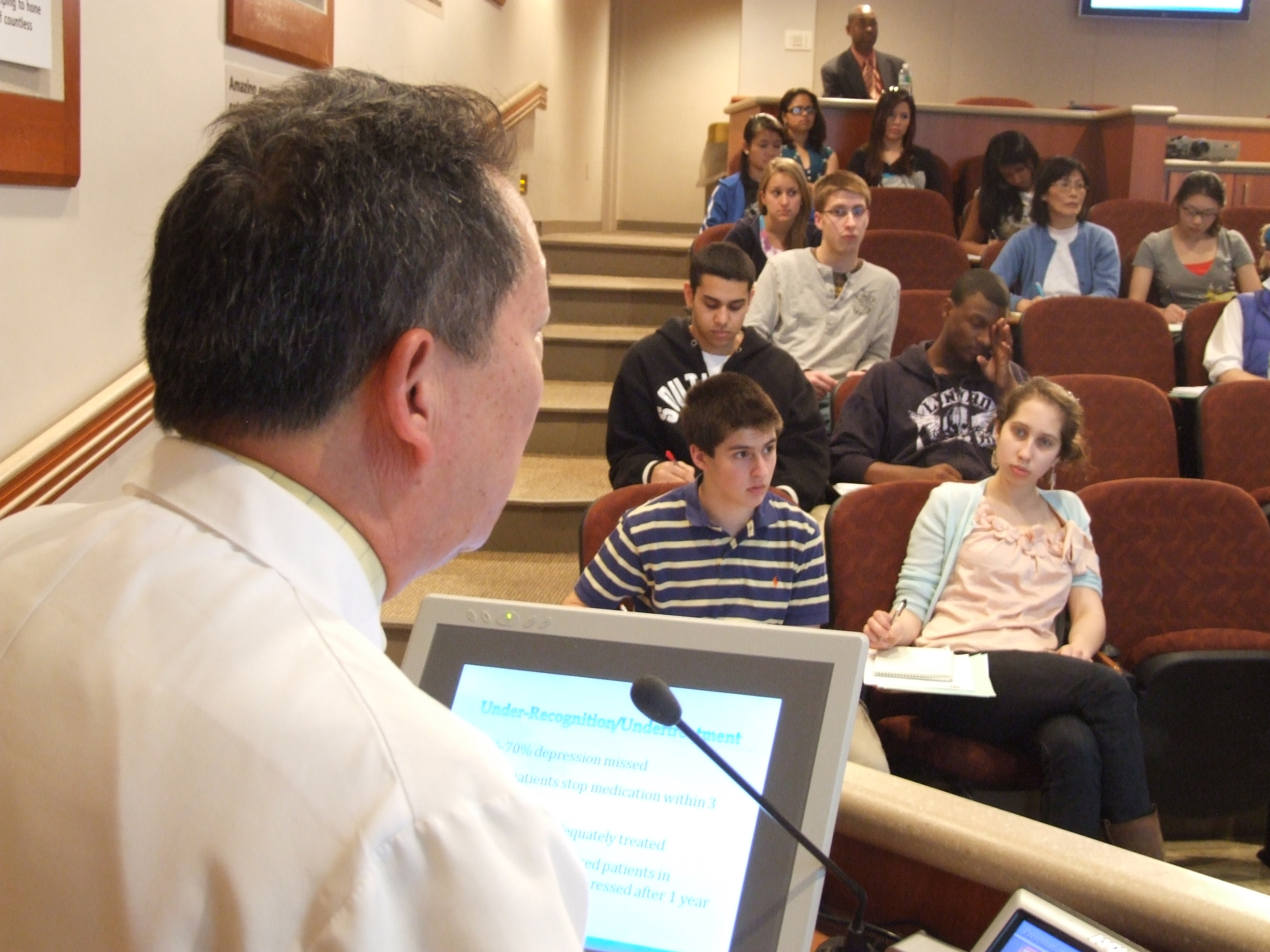
FARMINGTON, CONN. – More than 80 juniors and seniors from high schools throughout Connecticut are taking part in this year’s High School Mini Medical/Dental School Program at the University of Connecticut Health Center.
Since March 4, the students have been meeting on Thursdays from 4 to 6 p.m., each time hearing two one-hour presentations on varying health and science topics. Sixty-five students participate in person at the Health Center’s Low Learning Center; 21 others join remotely via webcast. The program runs through April 22, when the students will “graduate,” earning diplomas.


“The goal is to inform and excite students about cutting-edge basic science research that is being conducted by some of the outstanding professors at the Health Center,” says Dr. Marja Hurley, associate dean of the UConn School of Medicine and director of UConn’s Health Career Opportunities Programs. “These students also receive lectures from outstanding physicians and dentists who provide care to patients.”

More information about the Health Career Opportunities Programs at the UConn Health Center is available at www.hcop.uchc.edu.

Students from 18 Connecticut high schools are participating in the 2010 High School Mini Medical/Dental School Program:

  • Avon High School
  • Bloomfield High School
  • Bristol Eastern High School
  • Cheshire High School
  • Danbury High School
  • Farmington High School
  • Glastonbury High School
  • Bulkeley High School
  • Hartford Area Seventh Day Adventist School
  • Sport and Medical Sciences Academy
  • University High School of Science and Engineering
  • Mercy High School
  • Simsbury High School
  • Chase Collegiate School
  • Crosby High School
  • Conard High School
  • Hall High School
  • Windsor High School

Photos: http://today.uchc.edu/images/news/minimed1.jpg and http://today.uchc.edu/images/news/minimed2.jpg
Caption: Dr. Leighton Huey, professor of psychiatry at the UConn School of Medicine, speaks to students attending the High School Mini Medical/Dental School Program at the UConn Health Center. The program runs through April 22, when more than 80 juniors and seniors from 18 Connecticut High Schools will earn diplomas.

The University of Connecticut Health Center includes the schools of medicine and dental medicine, the UConn Medical Group, University Dentists, and John Dempsey Hospital. Founded in 1961, the Health Center pursues a mission of providing outstanding health care education in an environment of exemplary patient care, research and public service. More information about the UConn Health Center is available at www.uchc.edu.

Note: News professionals are invited to visit the Office of Communications home page at today.uchc.edu for archived news releases and other information.

Powered by Blogger.

Enews And Updates